
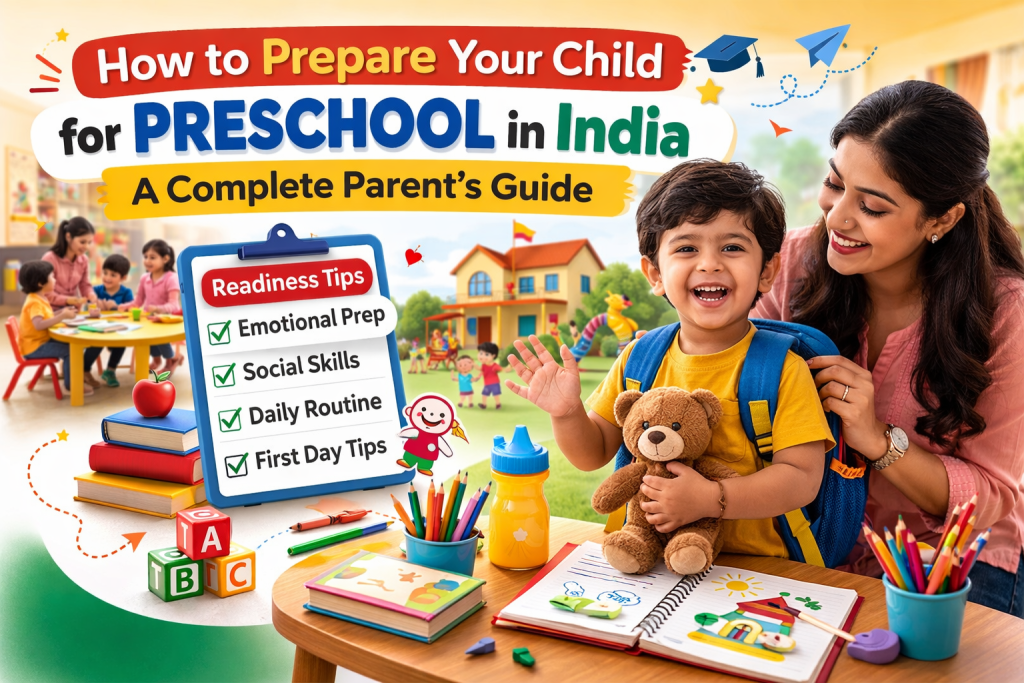
How to Prepare Your Child for Preschool in India | Parent Guide
Sending your child to preschool for the first time is not just an admission milestone — it’s an emotional turning point for the entire family. For many Indian parents, this phase comes with mixed feelings: Will my child cry every day? What if they refuse to stay in class? Are they too small? Have I prepared them enough? If you’re feeling anxious, you’re not alone. Every year, thousands of first-time parents search for how to prepare child for preschool in India, and most of them share the same concerns. The good news? With the right preparation, preschool becomes a joyful beginning — not a stressful one. This complete parent’s guide will walk you through everything you need to know — emotionally, socially, and practically — to make your child’s preschool journey smooth and confident. When Is the Right Age for Preschool in India? In India, preschool admissions generally follow this age structure: Playgroup: 2–3 years Nursery: 3–4 years LKG (Lower Kindergarten): 4–5 years However, preschool readiness is not just about age. It’s about developmental readiness. Signs Your Child Is Ready for Preschool Your child may be ready if they: Show curiosity about other children Can sit for 5–10 minutes for a simple activity Follow basic instructions (“Give me the ball”) Express basic needs verbally or through gestures Manage short separations from parents If your child is still clingy or shy, don’t panic. These are common and manageable through gradual preparation. Emotional Preparation: Reducing Separation Anxiety One of the biggest concerns parents have about the first day of preschool is separation anxiety. Let’s understand this clearly:Crying in the first few days is normal. It does not mean your child is not ready. How to Reduce Separation Anxiety Before Preschool 1. Practice Short Separations Start small: Leave your child with grandparents for an hour. Encourage playdates where you step away briefly. Attend hobby classes where they sit independently. Gradual exposure builds confidence. 2. Talk Positively About School Use excitement, not fear. Instead of saying: “If you don’t listen, I’ll send you to school!” Say: “You’ll make new friends and play with toys at school!” Children absorb your tone more than your words. 3. Create a Goodbye Ritual A simple routine works wonders: One hug One high-five One cheerful “See you soon!” Consistency makes transitions predictable and comforting. 4. Manage Your Own Emotions Children sense parental anxiety instantly. If you look worried at drop-off, your child will feel unsafe.Stay calm, confident, and cheerful — even if you’re emotional inside. Social Preparation: Helping Your Child Interact Confidently Preschool is often a child’s first structured social environment. Here are essential preschool readiness tips: Teach Sharing and Turn-Taking At home: Play simple board games. Practice taking turns while playing with blocks. Say: “Now it’s mamma’s turn, then it’s your turn.” Encourage Interaction with Other Children Arrange playdates. Visit parks regularly. Encourage group activities. Even observing other children helps shy kids adjust. Teach Basic Manners Simple habits matter: Saying “please” and “thank you” Greeting teachers Asking before taking toys Following Simple Instructions Practice 2-step commands: “Pick up your shoes and keep them in the rack.” “Bring your bottle and sit here.” This helps during classroom routines. Building Independence Skills: Preschool Preparation Checklist Preschool is smoother when children can manage basic tasks independently. Preschool Preparation Checklist Eating Skills Eats with a spoon independently Drinks from a cup or bottle without spilling Sits in one place while eating Toilet Readiness Can communicate toilet needs Wears easy-to-remove clothing Basic toilet training initiated Hygiene Habits Washes hands with guidance Uses a handkerchief Covers mouth while sneezing Dressing Skills Wears shoes (with assistance if needed) Recognizes their own bag and bottle Responsibility Basics Helps pack their bag Identifies personal belongings Remember: perfection is not required. Basic familiarity is enough. Establishing a Preschool Routine Routine reduces anxiety. Start preparing at least 2–3 weeks before school begins. 1. Align Sleep Schedule 10–11 hours of night sleep Fixed bedtime Wake up at school time daily Late-night screen habits must reduce gradually. 2. Practice a Morning Routine Simulate school mornings: Wake up Brush Get dressed Eat breakfast Leave the house Make it fun and predictable. 3. Reduce Screen Time Excessive screen exposure affects attention span. Replace screens with: Picture books Storytelling Puzzles Building blocks 4. Build Healthy Eating Habits Encourage: Simple home-cooked meals Fruits Finger foods they can manage independently Preparing for the First Day of Preschool Here’s a step-by-step plan to make the first day of preschool smoother. Step 1: Visit the School Beforehand Show the classroom Introduce the teacher Let your child explore the environment If considering admissions, explore the Preschool Admission in India process early. Step 2: Meet the Teacher Build trust: Share your child’s habits Mention allergies or concerns Ask about adjustment support Step 3: Pack Smart Typical essentials: Extra clothes Labeled water bottle Small napkin Comfort object (if allowed) Step 4: Say Goodbye Confidently Keep it short. Do not sneak away. Do not return repeatedly if they cry. What NOT To Do Don’t threaten with school. Don’t compare with other children. Don’t prolong drop-off. Handling the First Week of Preschool The first week may include: Crying at drop-off Clinginess at home Temporary sleep changes This is normal. How Long Does Adjustment Take? Typically: 3–7 days for some children 2–4 weeks for others Every child has a different temperament. How Parents Should Respond Stay calm and consistent. Avoid dramatic reactions. Celebrate small wins. Communicate with Teachers Good preschools maintain strong parent communication. Regular updates reassure you. At institutions like Shemrock Group of Schools, teachers actively support transition and emotional adjustment through child-centric methods. Common Mistakes Parents Make 1. Comparing Children Every child develops differently. Avoid: “See, Riya doesn’t cry!” Comparison increases anxiety. 2. Over-Preparing Academically Preschool is not about writing A-Z fluently. Focus on: Social skills Emotional security Curiosity 3. Staying Too Long During Drop-Off Lingering makes separation harder. 4. Speaking Negatively About School Children internalize your language. How Parents Can Support Learning at Home Preschool learning continues at home. Build
How to Prepare Your Child for Preschool in India | Parent Guide Read More »